Storytelling
Reading stories and learning about them may seem like a frivolous waste of time, unconnected from your future career and life. However, nothing can be further from the truth. Stories and narratives form our identity, influence our choices, and offer a window to the world. We can relate to stories and our opinions are moulded by them.
Whenever and wherever there have been people, there have been stories. In early human history stories were shared culture and created a sense of belonging. But also today they offer meaning, encompass emotion, and provide connection. And stories are more prevalent than ever before. From TikTok or Instagram Reels to politics and marketing, stories dominate society. Storytelling is the way to sell products, influence opinions, and gather support. And although digital reading thrives, physical books still endure. People remain hungry for stories, whether to find gossip or profound wisdom.
Literature is a form of storytelling. It focusses on the human condition, which means it explores how humans are. It (1) considers, (2) reflects on, and (3) gives us insight into life as it is lived by other people. It explores contemporary ideas and attempts to be original, which is usually different from other forms of fiction. The reader is often invited, teased, or harassed to think about the work itself and their own lives. You don’t study literary novels; you learn from them.
Four reasons for reading fiction
Reading helps you become a stronger, more flexible and more profound human being as it sharpens your thinking. There are four areas which will be affected by reading regularly: general reading skills, creative thinking, challenging your limiting factors, and entertainment. Mastering these areas does not happen instantly. Reading is not the miracle drug that transforms you after one book. It should be an intricate part of your life, which requires regular exercise. But the reward is worth all the effort: better equipped to acquire and verify information (including prompting AI and evaluating its output), better understanding of the world, and making yourself a mentally stronger and reflective human being.
Improving reading skills: become a skilled reader
 The most practical advantage of reading is, of course, acquiring reading skills. The more you read in any language, the faster you read in that language. Especially when going to university it is important to be able to read fast with an (almost) complete understanding of what you have been reading. Also, generative AI usage also requires well-developed reading skills as generative AI usage is not an IT-skill but a language skill.
Speed
As reading is a skill you will be able to perform better by doing it more often. By reading often you will find patterns in a language, recognise word structures, and be able to turn words into meaningful context faster: it gives you a feeling for the language. However, just like sports training you need to keep up your reading to retain that speed. As soon as you stop reading on a regular basis, your reading becomes slower and you will struggle more.
Understanding
With reading you will encounter difficult structures, enigmatic words, and strange contexts which you need to visualise or comprehend. How should I read this? What should I derive from this? Reading is like preparing food, the more do it, the more you understand the ingredients and how to use them.
Extending vocabulary
Alan Watts once said, “The only thing you really know is what you can put into words.” The more words you know, the more you are able to express yourself. Novels offer a great number of words in context in many fields. Reading a wide variety of novels offers you a broad lexicon of a language. Therefore, it is important to read different authors with different writing styles. Shorter novels tend be more abstract, longer novels more descriptive. Mix your reading to have a taste of all kinds of writing styles to eventually find your own voice. You should not look up every word that you do not know, because it will disturb the flow of reading. When a word keeps recurring, look it up and memorise it.
Imagination: a bridge to creative thinking
 Reading increases your capability of imagining things. This may sound fancy and superficial, but understand that the imagination is connected to creative thinking: being able to come up with original ideas for troubles and tribulations in the present and future. Being imaginative helps in foreseeing the future for bigger and smaller issues.
Creative thinking
It is true that movies and TV-series also offer stories that inspire the imagination. The problem with this media is that the director has already made a ton of choices in the field of the imagination. With reading, you have to come up with the backdrops, the stage props, the characters and the like. Your brain has to work hard in creating the story in your mind.
Increasing your imaginative powers, increases your creativity, to come up with new, original ideas for current problems, to make connections in your long-term memory and have a better understanding of how the world works. Like increasing your general reading skills, reading trains your brain to think imaginatively and thereby creatively, making you a versatile asset to any team.
Foreseeing
Reading a lot also helps you to know our history, understand our present and foresee the future. Novels have a connection with both fiction and the spirit of the age, that is, how people understood the world at the time of writing. They are contemporary reflections on society and reality They also show you general truths about the human condition; how people are.
Knowledge of the world: challenging your limiting factors
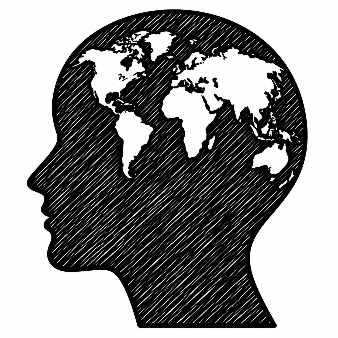 Reading helps your imagination, which is connected to creative thinking. Reading helps with getting original ideas, finding solutions to challenges, and being able to think outside the box.
Creative thinking
It is true that movies and TV-series also offer stories that inspire the imagination. The problem with these media is that the director has already made a lot of choices. With reading, you have to come up with the backdrops, the stage props, the characters and the like. Your brain has to work hard to create the story in your mind. Increasing your imaginative powers, increases your creativity, and will help to come up with new, original ideas.
Foresight
Reading also helps you to understand the past, know the present, and foresee the future. You will find patterns in world events and how people respond to them. These patterns help to have ideas about the future. History is often cyclical and getting to know more about people and their lives, help you foresee what might happen in the future and how people respond to that future.
Getting and forming ideas and opinions
Novels challenge you to form your ideas and opinions, especially with unreliable narrators. Do you stand by the protagonist or do you oppose the ideas presented to you? Novels offer you situations to make a choice, to challenge your values and show a mirror. Do you conform with your culture merely because it has always been like this, or do have a clear opinion why you support or oppose something? Discussing novels with peers also helps to strengthen your ideas (and help you in creating sound arguments).
Entertainment
 Finally, novels are read because they are a form of entertainment. This might not be the case for you, as you might not be an avid reader (and maybe you will never be), but the more skilled you get at something, the more you appreciate it.
If you read smoothly at a regular speed, comprehend your reading well, are able to unlock your imagination, be open to new ideas and cultures, appreciate the intricate use of language, and feel empowered by its ideas, you most probably will see novels as entertainment and perhaps even as life-fulfilling.
Just tell me what the book is about
Students often just want to know what book is about. However, that would be difficult to answer. Sure, you could find a summary or ask AI but reading is an interactive, personal activity. As a reader you have to make sense of the story and what it means to you. Readers are not passive receivers of information. Therefore, it is more important to ask what it means to you. A summary does not suffice. It is not about information; it is about experience.
However, the range of meanings is limited. As a reader you can add any meaning to the novel if you can support it by evidence from the novel. You have to use arguments and quotes why you think the novel is about something. Novels therefore also teach us how to respond to situations and how to form ideas. Novels are fiction but also hold truth.
Literature trains us in critical thinking (an academic skill). Novels help us form opinions on life. You shouldn’t necessarily have to agree with the main character or author (and sometimes an author challenges you by offering an offensive viewpoint!), but you should always think critically about the presented situations. Literature can help you in shaping who you are or want to be, if you allow it. The book just might be about you.

This work is licensed under a
Creative Commons Attribution-NonCommercial 4.0 International License.
All texts are written by JNG; all images are generated by ChatGPT 5.6
Be the first to comment